



Stormwater Management
Storm Water Plan
4. What is an effective stormwater management?
Vision
Lycoming County recognizes the significance of a Stormwater Manangement Plan to prevent adverse impacts related to uncontrolled accelerated runoff.
Mission
To minimize stormwater runoff within the County by effective land use management and inter-municipal collaboration and partnership.
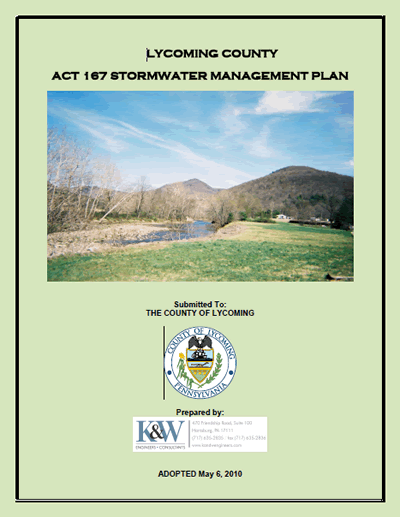 Lycoming County Act 167 Stormwater Management Plan
MS4 Stormwater Partnership
What is stormwater runoff and negative impacts of inadequate stormwater management?
Stormwater is water from precipitation that flows across the ground and pavement when it rains or when snow and ice melt. The water seeps into the ground or drains into storm sewer systems – a system with inlets and pipes that directly connect to local waterways. Stormwater becomes a problem when it picks up debris, chemicals, dirt and other pollutants, clogging storm sewers and causing flooding and erosion of stream banks. This untreated stormwater runoff empties in our local streams and rivers!
Inadequate management of stormwater runoff results in:
- Increase in flood flows and velocities
- Increased erosion and sedimentation
- Inadequate carrying capacity of streams and storm sewers
- Increased cost of public facilities
- Reduced groundwater recharge
- Undermined floodplain management efforts
- Endangered public health and safety
To understand more about stormwater impacts, please download DEP When It Rains, It Drains brochure.
What is an effective stormwater management?
The negative impacts of stormwater runoff can be reduced by practicing effective stormwater management strategies. Some strategies are simple and low-cost ways to reduce runoff pollution and problems caused by flooding. Some examples include: rain barrels, rain gardens, vegetated filter strips, level spreaders, disconnecting impervious surfaces, porous pavements and many others Best Management Practices (BMPs).
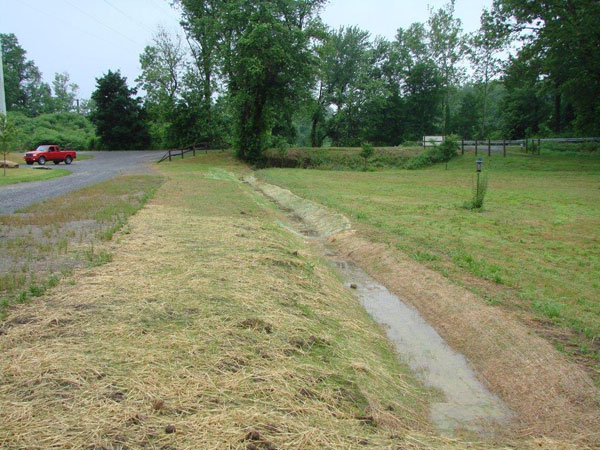
Muncy Heritage Park and Nature Trail Vegetated Swale
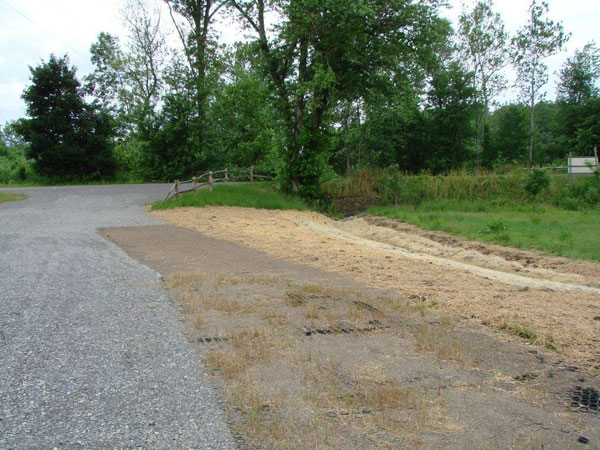
Muncy Heritage Park and Nature Trail Porous Pavement

LCWSA Porous Pavement
Storm Water Permit Application Form
MS4
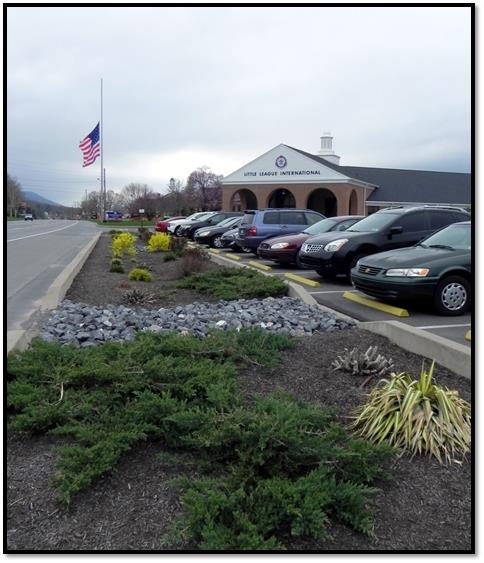
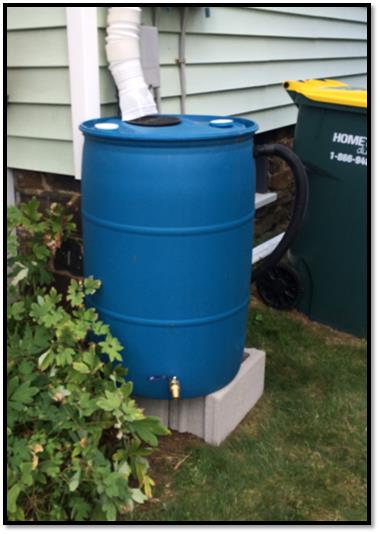
South Williamsport’s Infiltration Trench Williamsport Resident’s Rain Barrel
Lycoming County MS4 Coalition
The nine MS4 municipalities and one higher education institute joined together to create the Lycoming County MS4 Coalition. A Memorandum of Agreement (MOA) executed in August 2014 describes cooperative partnership efforts to be undertaken with the assistance of Lycoming County. The MS4 Coalition consists of representatives from all ten MS4s who meet monthly to oversee the program. A new position, MS4 Planner, was created in the County Planning Department and is fully funded by the ten MS4s. The MS4 Planner’s role is to assist the individual MS4s to achieve full regulatory compliance in the most cost-effective manner possible, and alleviate the workload required of municipal staff and officials.
The following are the 10 MS4s in the Lycoming County MS4 Coalition:
- City of Williamsport
- Borough of Duboistown
- Borough of Montoursville
- Borough of South Williamsport
- Fairfield Township
- Hepburn Township
- Loyalsock Township
- Lycoming Township
- Old Lycoming Township
- Pennsylvania College of Technology
Chesapeake Bay Pollutant Reduction Plans
The Chesapeake Bay Pollutant Reduction Plan is a separate plan under the MS4 Permit that is required when any MS4 discharges to the Chesapeake Bay. It includes a narrative of the MS4 that drains to the Chesapeake Bay (including pervious and impervious cover, and land use), the incorporation of environmental improvements to municipal infrastructure upgrades, and the identification of control measures that reduce pollutant discharges including nitrogen, phosphorus, and sediment to the Chesapeake Bay.
Williamsport Area Joint MS4s CBPRP
- Appendix A CBPRP
- Appendix B Stormwater Best Management Practices
- Appendix C BMP Implementation Schedule
- Appendix D Structural BMP Priortization Methodology
- Appendix E Maps
- Appendix F Evidence of Public Involvement and Municipal Adoption
- Chesapeake Bay Pollutant Reduction Plan
Residents/Homeowners
Rain barrels, rain gardens, and other best management practices can help infiltrate the storm water and reduce the runoff from your property.
- 5 Easy Steps to Make a Rain Barrel
- Eco-Friendly Rain Barrels
- Homeowners Guide to Stormwater Management
- Eco-Friendly Homeowners Guide to Stormwater
- Reducing Water Pollution
- http://www.onlyraindownthedrain.com/households
Schools
- EPA stormwater Page for Kids
- Stormwater Placemat
- Stormwater Stickers:
- Splish and Splash (A Tale of Two Raindrops)
- K-3 Activity Book
- K-3 Water Cycle
- 4-8 Word Scramble
- 4-8 Water Purification
- 4-8 Non-Point Pollution
- 4-8 Plants and Water Purification
- 4-8 Fun Facts Matching Game
- Keeping Your Streams and Lakes Healthy
- http://www.onlyraindownthedrain.com/kids
Developers
- PA BMP Manual
- EPA Design and Guidance Manuals for LIDs
- Developer Fact Sheet
- http://www.onlyraindownthedrain.com/construction
Municipal Employees
- Field Screening Program Data Collection Form
- Illicit Discharge Inspection Summary Report Form
- Basin Retrofit
- PA BMP Manual
- www.stormh2o.com
Businesses
Additional Resources
- DEP MS4 Website
- EPA MS4 Website
- www.stormwaterpa.org
- EPA Stormwater Website
- Penn State Extension Program on Stormwater
- PA’s Water Plan
- Susquehanna River Basin Commission
DEP CBPRP Training Materials Fall 2016
- TOC & Agenda.pdf
- Public Participation.pdf
- Mapping part 1.pdf
- Mapping part 2.pdf
- Mapping part 3.pdf
- Mapping part 4.pdf
- Pollutants of Concern.pdf
- Mapping part 5 small.pdf
- Existing Load part 1.pdf
- Existing Load part 2.pdf
- Existing Load part 3.pdf
- BMP Effectiveness.pdf
- BMP Selection.pdf
- TDML Plans.pdf
- BMP Funding part 1.pdf
- BMP Funding part 2.pdf
- O&M.pdf
- Submission.pdf
- Permit part 1 small.pdf
- Permit part 2.pdf
- Retrofit small.pdf
- Resources part 1.pdf
- Resources part 2.pdf
- PRP Methodology.pdf
- Runoff curve.pdf
There are stormwater requirements under the federal Clean Water Act, and these requirements are administered under the Pennsylvania Department of Environmental Protection’s (PA DEP) Municipal Separate Storm Sewer System (MS4) program. The MS4 program requires the Municipalities to incorporate 6 elements into their stormwater management programs, called minimum control measures:
- Public Outreach and Education
- Public involvement and participation
- Illicit discharge detection and elimination
- Construction site runoff control
- Post-construction stormwater management in new development and redevelopment
- Pollution prevention and good housekeeping for municipal operations and maintenance
Storm water is water from precipitation that flows across the ground and pavement when it rains or when snow and ice melt. The water seeps into the ground or drains into storm sewer systems – a system with inlets and pipes that directly connect to local waterways. Storm water becomes a problem when it picks up pollutants such as oil, grease, metals and coolants from vehicles.
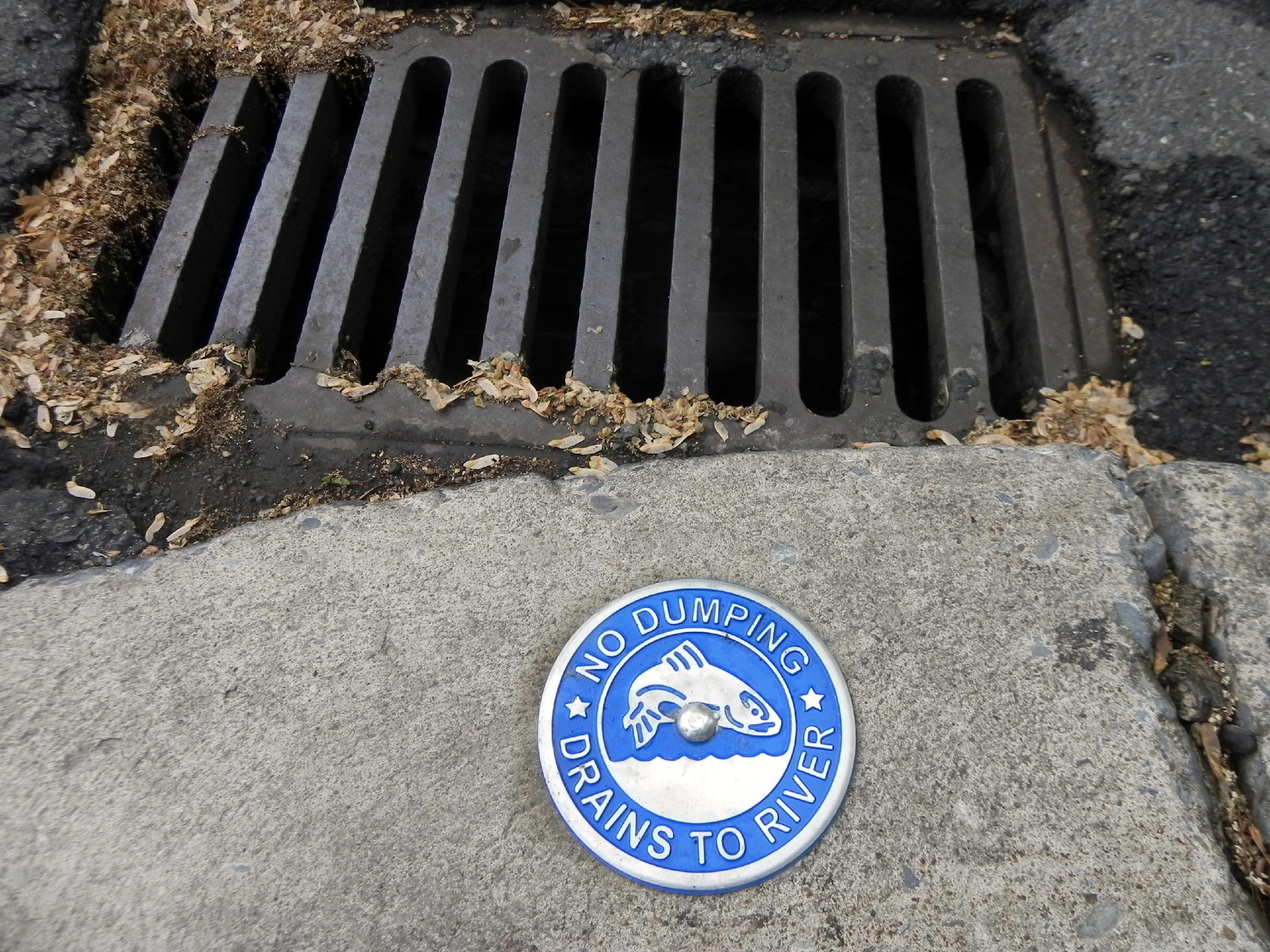
Storm Drain Marker in Williamsport
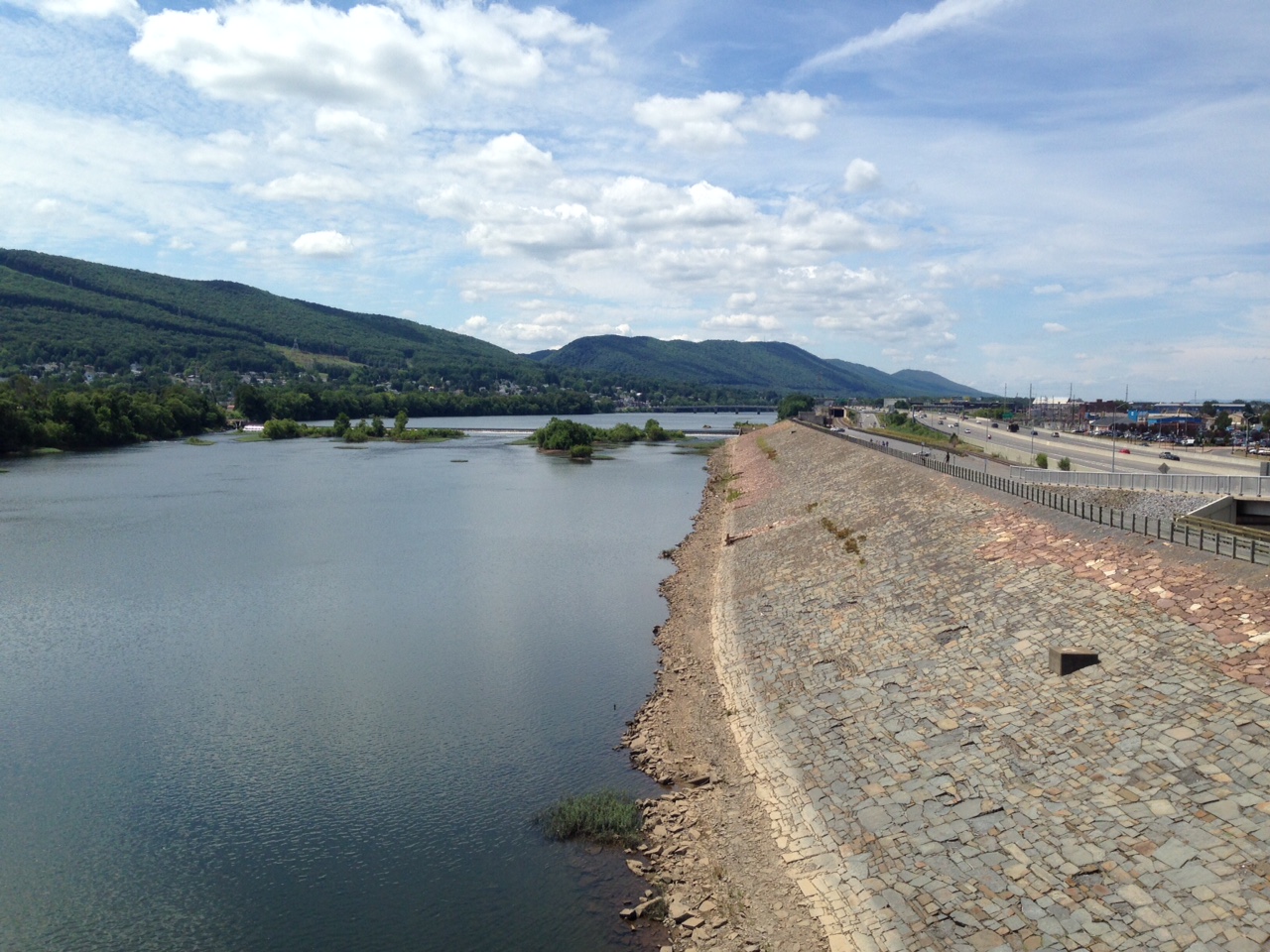
River Walk and West Branch Susquehanna River
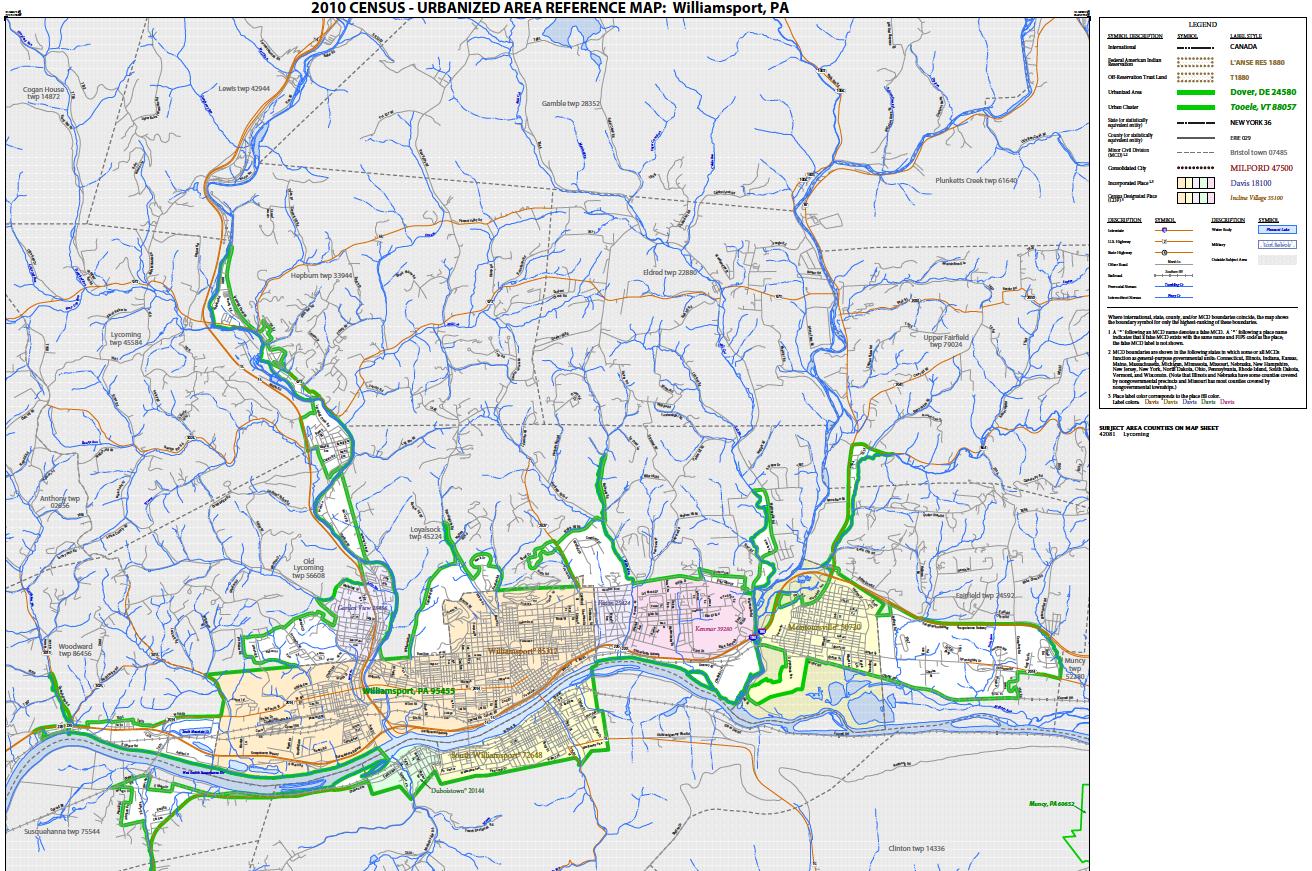
River Walk and West Branch Susquehanna RivUnder the 1987 Clean Water Act Amendments, the U.S. EPA developed storm water regulations to address stormwater that might impact water quality. These regulations were set up depending upon the US Census population data. The stormwater regulation phase affects about 1,000 municipalities in Pennsylvania. Those municipalities that are located within and "urbanized area" as defined by the 2010 Census were required to apply for a National Pollutant Discharge Eliminations System (NPDES) permit to discharge stormwater from their municipal separate storm sewer system (MS4).
The map below is the urbanized area and the municipalities and non-municipalities that are required to have an MS4 permit.
Responsible storm water management helps protect our local waterways from unnecessary pollutants from entering to the West Branch Susquehanna River, which flows to our neighboring communities. It is important that everyone is aware of the pollutants that are harmful to our water quality.
“Ever Wonder Where the Rain Drains? Sustainable Drainage Animation”
Please see brochures below:
- Only Rain Down the Storm Drain Brochure
- When it Rains, It Drains Brochure
- DEP Fact Sheet on Swimming Pool Water Discharge Guidlines
- DEP Fact Sheet Tips for Residential Heating Oil Tank Owners
An illicit discharge is an unauthorized to a municipal separate storm system that is not storm water. Examples of illicit discharges include:
- Motor Vehicle Fluids
- Household hazardous wastes
- Grass Clippings
- Leaf Litter
- Animal Wastes
- Unauthorized discharge of sewage
- Unauthorized discharge of industrial waste
- Unauthorized discharge of restaurant waste
An illicit discharge can be accidental or intentional. If you see an illicit discharge, please report the incident to your local municipal (borough, city, or township). For emergencies only: call North Central PA DEP 24 Hour Office at 570-327-3636 or Lycoming County 911 Center at 911.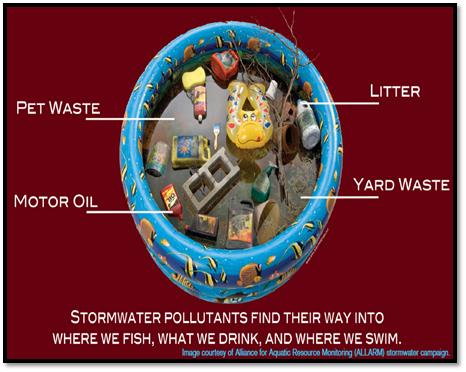
Stormwater Management
Pennsylvania Stormwater Management Act
The need for stormwater management in Pennsylvania has been demonstrated repeatedly in the past. As the population of the area increases, land development is inevitable, and the alteration of natural ground surfaces, whether by residential, commercial, industrial development or agriculture, results in decreased infiltration of rainfall. As a result of continued development, the volume and rate of stormwater runoff increases causing environmental impacts including flooding, stream channel erosion and siltation, water quality degradation and reduced groundwater recharge. Cumulative effects of development in some areas of a watershed can result in flooding of natural watercourses with property damages running into millions of dollars.
Recognizing the need to deal with the serious and growing problem of extensive damage from uncontrolled stormwater runoff, the Pennsylvania General Assembly enacted Act 167. The statement of legislative findings at the beginning of the Pennsylvania Stormwater Management Act (Act 167) sums up the critical interrelationship among development, accelerated runoff, and floodplain management. Specifically, this statement points out that:
- Inadequate management of accelerated runoff of stormwater resulting from development throughout a watershed increases flood flows and velocities, contributes to erosion and sedimentation, overtaxes the carrying capacity of streams and storm sewers, greatly increases the cost of public facilities to carry and control stormwater, undermines floodplain management and flood control efforts in downstream communities, reduces groundwater recharge, and threatens public health and safety.
- A comprehensive program of stormwater management, including reasonable regulation of development and activities causing accelerated runoff, is fundamental to the public health, safety and welfare and the protection of the people of the Commonwealth, their resources and the environment.
To find out more about Pennsylvania Stormwater Management Act, please download The Pennsylvania Stormwater Management Act 167 Planning Program.
The Lycoming County Act 167 Plan (the Plan) is intended to provide stormwater management guidance on a watershed level, in urban planning and the design of land development. A primary goal of the Act, and thus the Plan, is to prevent future problems resulting from uncontrolled runoff. These problems include flooding, erosion, sedimentation, landslides, pollution, and debris often carried by stormwater runoff. A basic premise of the Act is that those activities that generate additional runoff, increase its velocity, or change the direction of its flow, shall be responsible for controlling and managing the runoff so that these changes will not cause harm to other persons or property either now or in the future.
Is it required to implement a Stormwater Management Ordinance?
Yes.
Each municipality is responsible for adopting a stormwater ordinance as required by the State Act 167. It's best advised that each municipality would adopt their own free standing stormwater ordinance since there will be stormwater permits required for certain land disturbances (i.e. driveway) that do not fall under the County or respective municipal zoning and subdivision/land development ordinances.
DEP Stormwater Fact Sheet (32KB PDF)
How to adopt a Stormwater Management Ordinance?
Municipalities may either adopt the model ordinance as a free standing ordinance or modify their existing stormwater ordinance to be consistent with the County of Lycoming Creek Watershed Stormwater Plan and Model Ordinance. Each municipality needs to determine the consistency of their ordinance with the help of the municipal solicitor and/or engineer.
Please note that you need to modify your Zoning and/or Subdivision & Land Development Ordinances to include a cross-reference to the municipal stormwater ordinance.
- Municipal Official's Handbook (355KB PDF)
- Municipal Stormwater Plan Application
- Stormwater Permit Process Flowchart (500KB PDF)
- Appendix E: Runoff Coefficients in PDF or Excel formats.
How can residents and landowners manage stormwater on their property?
Please consult Lycoming County Minor Stormwater Project Manual (779KB PDF) for other ways to manage stormwater runoff.
- Stormwater Management for Homeowners
- Center for Neighborhood Technology (CNT) - Green Values® Stormwater Toolbox
- CNT - National Stormwater Management Calculators
Benefits of Stormwater BMPs
- Removal of a wider variety of pollutants (nitrogen, phosphorus, heavy metals, petroleum compounds, and suspended solids)
- Reduction of peak flows
- Increase in groundwater recharge
- Stabilization of flow into adjacent natural wetlands and streams
- Reduced amount of infrastructure needed (and associated maintenance)
- Improved aesthetics
Comprehensive watershed Stormwater Management Plans have been prepared for the following watersheds.
Grafius/Millers/McClures Run
The Plan was adopted in 1999 by the City of Williamsport, Loyalsock Township, Hepburn Township, and Eldred Township.
Lycoming Creek Watershed
The plan was adopted in 2010 and also covers the headwaters of Chatham Run and Fishing Creek.
- Lycoming Creek Stormwater Plan
Lycoming Creek Stormwater Map Book (in sections, 3.8MB or less each)
Part 1 | Part 2 | Part 3 | Part 4 | Part 5
Lycoming County Stormwater Plan and Model Ordinance
Lycoming County and the Department of Environment Protection (DEP) have entered into a grant agreement that provides for the development of a County Stormwater Plan and Implementing Ordinance that are to apply to the remaining watersheds within the County that are not covered under an adopted Act 167 Plan.
Lycoming County Links
- Lycoming County Planning and Community Development Department
- Lycoming County Convservation District
Pennsylvania Links
- Pennsylvania Department of Environment Protection (PA DEP)
- Department of Conservation and Natural Resources (PA DCNR)
- Endless Mountains RC&D Council
- Pennsylvania Campaign for Clean Water
- Clean Water Action